
Clinical Presentations:
I love speaking to health professionals!
Taking complex clinical information and presenting it in an understandable, sticky format and then delivering it to audiences hungry for data brings me a great deal of joy.
Although I’m happy to present to any clinical audience, my primary groups are:
- Women’s health professionals who want a deeper dive into obesity treatment topics
- Obesity medicine professionals who want a deeper dive into women’s health topics
- Primary care professionals who want a data-driven overview of either obesity treatment or women’s health issues.
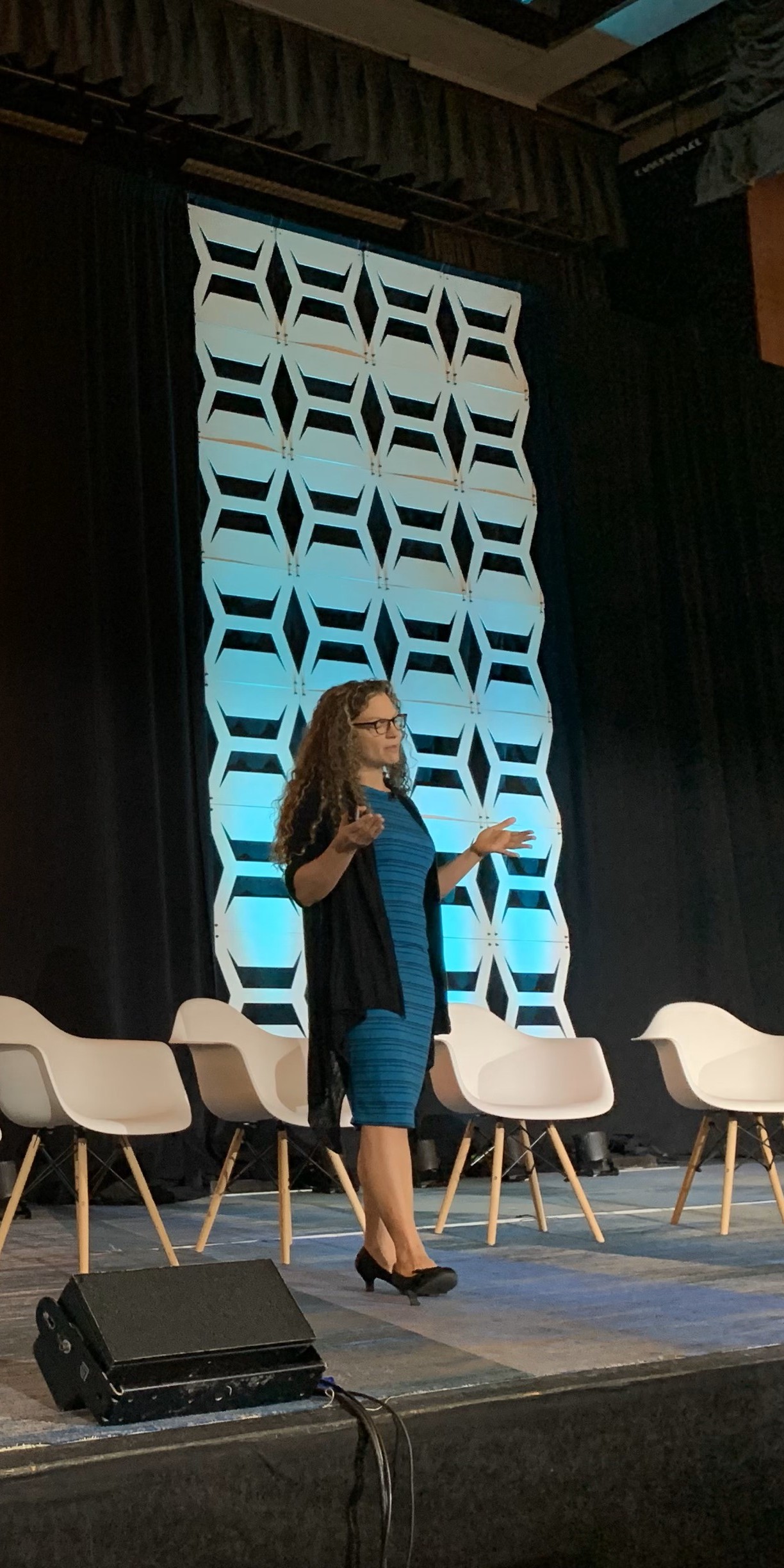
Talks Specific to Women’s Health:

Learning Objectives:
- Describe how perimenopausal and menopausal hormonal shifts impact weight and metabolism.
- Distinguish the physiologic changes experienced during the menopause transition with psychosocial changes commonly experienced by women during this life stage.
- Develop evidence-based strategies tailored to women during the menopause transition.
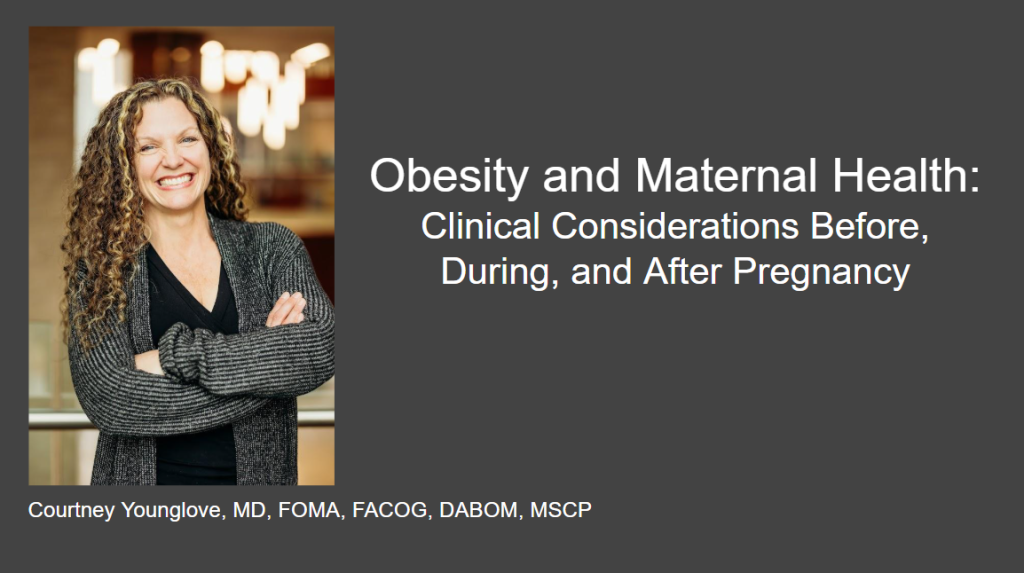
Learning Objectives:
- Describe obesity as a chronic disease in the context of pregnancy and summarize its effects on maternal and fetal risks and outcomes across the peripartum continuum.
- Identify evidence-based counseling strategies for patients with obesity who are pregnant or planning pregnancy, including gestational weight gain targets and risk communication.
- Apply obesity medicine principles to the postpartum period to counsel patients on weight trajectory, cardiometabolic risk reduction, and long-term obesity management following pregnancy.
Learning Objectives:
- Calculate how the gender wage gap compounds over time, which impacts women’s overall healthcare utilization and access.
- Describe how benefit plans disproportionately affect out-of-pocket healthcare expenses for women.
- Explain three ways in which obesity adversely affects women’s health issues.
Talks Primarily Focused on Obesity:
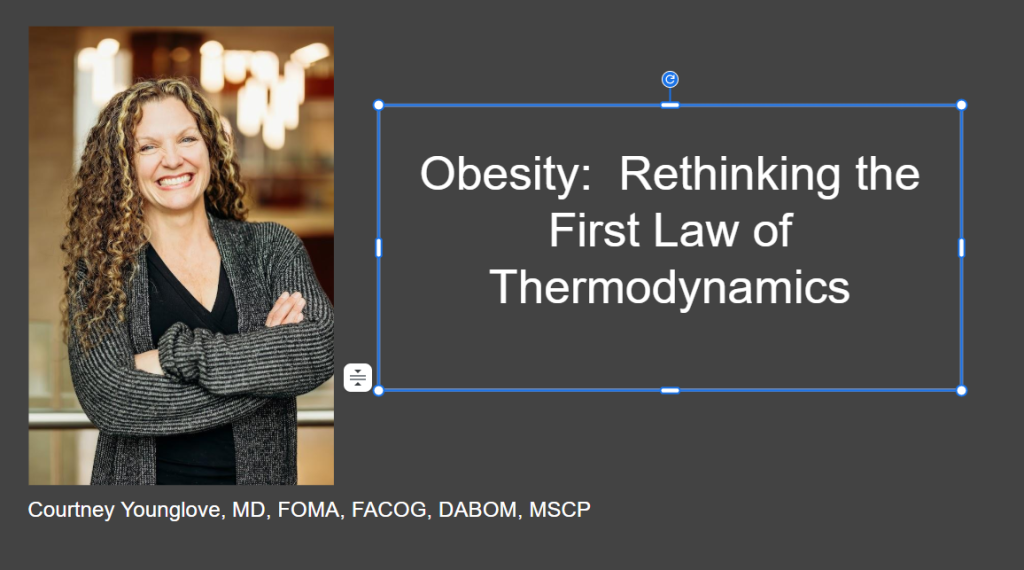
Learning Objectives:
- Recognize the shortcomings of the conventional energy balance hypothesis and describe the hormonal/regulatory processes that better explain adiposity and metabolic syndrome.
- Apply a chronic disease management framework to obesity treatment that, similar to other chronic diseases, distinguishes between prevention and treatment
- Implement current scientific data into counseling and management of obesity and metabolic disease.
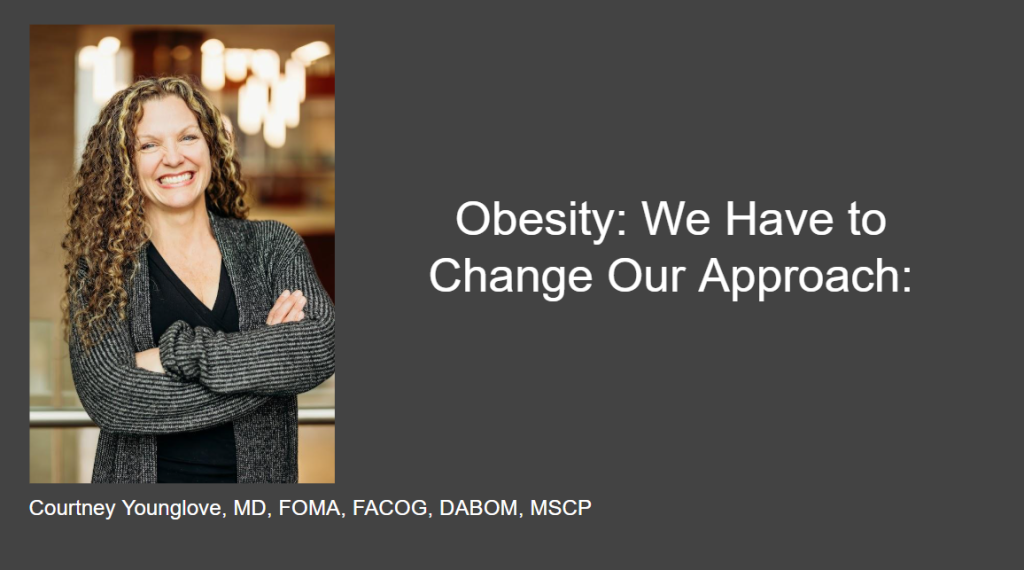
Learning Objectives:
- Describe the biological mechanisms underlying obesity, including genetic, epigenetic, and hormonal pathways that differentiate it from the traditional calorie-balance model.
- Apply a chronic disease management framework to obesity treatment that, similar to other chronic diseases, distinguishes between prevention and treatment and acknowledges variation in response based on disease severity and the presence/absence of associated diagnoses.
- Identify systemic barriers to effective obesity care, including coverage limitations, treatment setting restrictions, and the relationship between obesity and metabolic dysfunction in the context of cardiometabolic disease management.
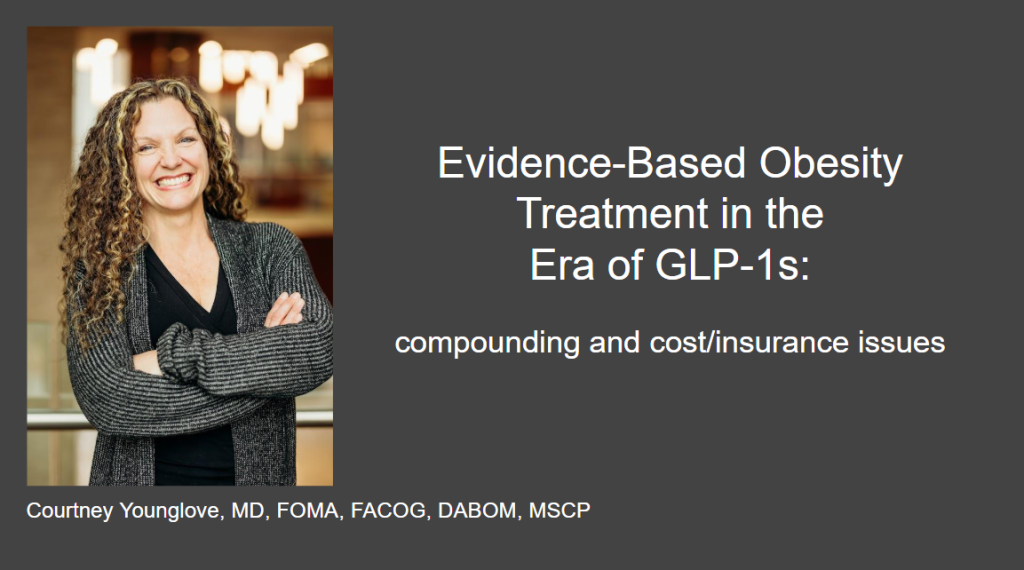
Learning Objectives:
- Review the latest evidence behind GLP-1 therapies for obesity.
- Discuss the role and regulation of compounded medications.
- Address real-world challenges related to access and affordability.
- Learn practical strategies to navigate treatment options, personalize care, and advocate for patients.